Self-service renewals
Let members renew themselves from a link, without an admin touching it.
Quick answers
6 questions · click to openHow does the member get in?
Through a personal link containing a token. They don't need a login and they don't need a password — which matters, because most members will never have either.
Can they pay on the same screen?
Yes. The renewal flow takes the payment and completes the renewal in one pass, so there's no step where they have to come back.
How long is the link good for?
The token expires — 90 days by default, and configurable in your renewal workflow settings.
What if the link is forwarded to someone else?
Anyone with the link can renew that membership, which is the trade-off for not requiring a login. Treat it like a personal payment link, and don't paste one into a group chat.
Does it work for couple memberships?
Yes. One renewal covers the membership, which is the point of a couple membership.
What if they'd rather we did it?
Record the payment against the membership as usual. Self-service is an option for members, not a requirement.
The cheapest renewal is the one nobody has to chase. Self-service renewals put a personal link in the member’s hands and let them do it themselves.
How the link works
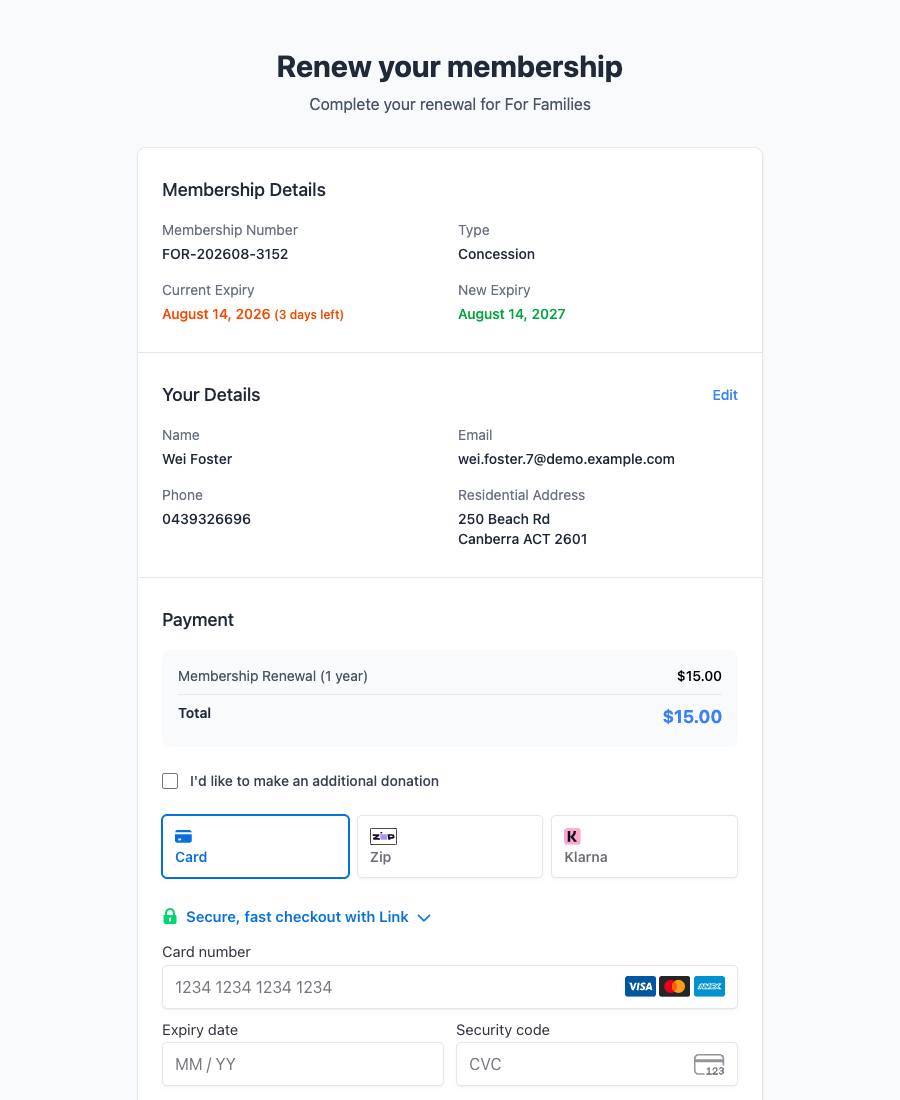
Each membership can carry a renewal token — a long random string in a URL that identifies that membership and nothing else. The member clicks it, sees their own details, pays, and they’re renewed.
No login, no password reset, no “I can’t remember my email address”. For a member who interacts with you twice a year, that removes the entire reason renewals get put off.
The trade-off, stated plainly
Anyone holding the link can renew that membership. That’s the price of not requiring a login, and for renewals it’s usually the right trade — the worst case is that somebody pays a membership fee for someone else.
Two habits follow from it:
- Send the link to the member, not to a list. It belongs in a personal email, not a newsletter.
- Let it expire. Tokens last 90 days by default, which is long enough for a renewal cycle and short enough that an old email isn’t a standing invitation.
Putting it to work
Self-service pairs with the reminder schedule: the reminder does the asking, the link does the renewing, and nobody in your office is involved unless something goes wrong. See activating, renewing and expiring for the reminder timings.
Keep an eye on the ones it doesn’t catch. A member who ignores three reminders isn’t a payment problem, they’re a relationship problem — and that’s a phone call, not a fourth email.